
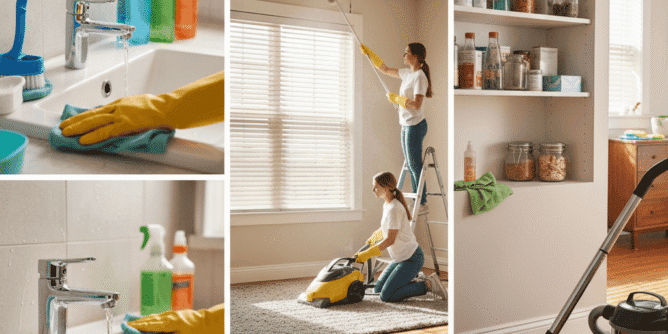
Deep cleaning is more than a heavy duty scrub session. It is a planned sequence of tasks that targets hidden buildup and areas that routine cleaning misses. When a space receives a full deep cleaning the goal is to restore surfaces and systems so they look and function closer to new, reduce germs and allergens, and extend the life of furniture and building materials.
This article walks through key Focus Areas During Deep Cleaning so facility managers and property owners can set priorities, estimate time, and inspect results. Real world tips and examples will help you decide when to schedule a deep clean and what to expect from a professional janitorial team.
High Traffic Zones That Demand Priority
High traffic zones show wear fast and collect dirt in layers. Focus Areas During Deep Cleaning in these locations include entryways, lobbies, hallways, and stairs. These spots require special attention because they influence first impressions and carry contaminants through the building.
- Entry mats and thresholds should be removed and cleaned separately. Trap in dirt can erode finishes on floors.
- Hard floors often need a multi step approach. Start with vacuuming or dry picking, follow with a scrub or machine cleaning, and finish with a neutralizing rinse when appropriate.
- Handrails and doorknobs are high touch points. Use a disinfectant that is safe for the finish and allow proper contact time.
Example tip: Schedule machine floor work during low traffic periods to allow surfaces to dry without foot traffic creating new marks.
Restrooms and Sanitation Hubs to Reduce Germ Load
Restrooms are a primary Focus Areas During Deep Cleaning because they host high humidity and frequent use. A deep clean must address both visible soils and microbial risk.
- Fixtures should be descaled and sealed where mineral deposits form. Check behind toilets for leaks or buildup.
- Grout lines and tile seams collect biofilm. Use a brush with a cleaning product rated for biological soils and follow with a suitable disinfectant.
- Dispensers and touchless systems need inspection and interior wiping to prevent mold growth.
Practical insight: Replace or service exhaust fans if humidity remains high after cleaning. Restroom odors often return when ventilation is insufficient.
Floors Walls and Hard Surfaces That Show Wear
Floors and walls are central Focus Areas During Deep Cleaning. Surface type dictates the method and tools. Hard surfaces can usually withstand stronger chemicals while delicate finishes require gentle care.
- Vinyl and sealed concrete can handle aggressive scrubbing. Test a small area first to confirm finish compatibility.
- Porous surfaces such as grout, wood, and stone may need specialized cleaners and sealants. For stone avoid acids that etch the surface.
- Wall cleaning often uncovers scuff marks and sticky residues. Use microfiber pads with an appropriate cleaning solution to lift soils without damaging paint.
Floor Restoration Steps
A typical restoration process has discrete steps that protect the investment in flooring. Start with a dry pick, then apply a cleaning solution, agitate with a pad or brush, extract wastewater, and allow full drying. For sealed floors consider a finish application only after the surface is completely free of residue.
When to Call in Machine Services
Some properties benefit from a scrubber or burnisher. Use machines when hand cleaning leaves streaks or when large areas would take several hours by hand. Machines can reduce labor time and give a more uniform result when used by trained operators.
HVAC Ducts Vents and Air Quality Components
Air systems are often overlooked yet they affect perceived cleanliness and occupant health. Focus Areas During Deep Cleaning of air systems include vents, return grilles, and accessible duct openings.
- Remove and clean grille covers and diffusers. Dust build up on these parts reduces airflow and spreads particles.
- Inspect and replace filters when clogged. A fresh filter improves circulation and reduces dust settling back on surfaces.
- When ducts are visibly dirty or have odor issues schedule a professional HVAC cleaning to remove settled dust and biological growth.
Tip: After deep cleaning the building wait a day and then recheck air registers for residual dust. Often additional targeted wiping of registers keeps dust from redepositing on cleaned surfaces.
Kitchens Breakrooms and Areas Where Food Is Prepared
Food related spaces have dual priorities. Cleanliness and control of food safety hazards. Focus Areas During Deep Cleaning here include appliances, behind equipment, and small crevices where crumbs and grease collect.
- Pull out refrigerators and stoves to clean under and behind them. Grease and debris accumulate in hidden corners.
- Sanitize worktops and utensil storage areas. Use a sanitizing solution approved for food contact surfaces and follow manufacturer instructions.
- Clean drains and garbage disposal areas. Standing water and trapped food create odors and attract pests.
Example action: Create a rotating deep clean schedule for kitchen appliances so heavy duty tasks are spread through the month instead of all in one day.
Office Equipment Electronics and Soft Goods
Electronics and soft goods need special handling. Focus Areas During Deep Cleaning for these items aim to remove dust and allergens while protecting delicate components.
- Use compressed air and anti static wipes for keyboards, vents, and monitors. Avoid spraying liquids directly on components.
- For upholstery vacuum first, then use a fabric cleaning product compatible with the material. Allow full drying before returning items to use.
- Carpet deep cleaning can use hot water extraction to remove trapped soils and allergens. For high traffic carpets consider a pre treatment and a follow up grooming step.
Practical note: Make an inventory of technology that must be unplugged or covered during floor or wall work. Planning prevents accidental damage and reduces downtime.
How Janitorial Teams Prioritize Tasks and Manage Time
Prioritizing is a predictable process when the goal is clear. Teams list all areas, score them based on frequency of use and potential risk, then create a time block schedule. This approach makes the best use of staff and materials while keeping occupants informed.
Checklists That Keep Teams Focused
Effective checklists break tasks into tangible steps with estimated times. A restroom deep clean might include checking dispensers, scrubbing fixtures, cleaning tile, disinfecting high touch points, and testing ventilation. Each step has an estimated time so the supervisor can track progress.
Tools Products and Safety Considerations
Choose cleaning products appropriate to the surface and the contaminant type. Follow label directions for contact time and dilution. Use PPE when handling stronger disinfectants and maintain a material safety data file for all products on site. For mechanical tools ensure operators are trained and that noise and ventilation are considered during use.
Scheduling Frequency and Measuring Outcomes
Focus Areas During Deep Cleaning are influenced by usage patterns. A public lobby may need quarterly deep cleans while a retail space with high customer turnover might need monthly treatments. Track visible changes and occupant feedback to refine the schedule.
- Set measurable targets such as reduced slip incidents on floors, fewer customer complaints about odors, and lower allergen readings when testing is available.
- Before and after photos make inspections straightforward and help justify budget for repeated work.
- Keep a log of equipment serviced and replaced. That documentation supports lifecycle planning for flooring and HVAC components.
Resource suggestion: For details on what areas janitorial teams typically prioritize you can review the recommendations from Freedom Cleaning Solutions which outline common practices and schedules used in commercial settings.
Clear communication with occupants sets expectations for access restrictions and noise. Post signs and share schedules so people can plan around machine work or temporary closures.
Conclusion
The Focus Areas During Deep Cleaning should reflect the building use and risks. High traffic zones, restrooms, floors, HVAC components, kitchens, electronics, and upholstery each need methods tailored to the surface and the occupant needs. A planned approach with checklists, proper products, and trained staff produces visible and lasting results. Take inventory, establish a realistic schedule, and track outcomes through simple measures such as test cleaning areas, before and after photos, and occupant feedback.
If you manage a property consider setting a deep cleaning plan for the year and adjust it based on seasonal changes and occupancy levels. When choosing a provider look for clear task lists, documented safety practices, and references that show results. A well executed deep clean reduces long term maintenance costs, minimizes downtime, and improves the daily experience of everyone who uses the space. Contact your cleaning partner or local janitorial team to set a trial deep clean and see the benefits in person.


