
Keeping Your Air Conditioner Efficient matters for comfort and for monthly energy bills. When an AC unit runs well it cools more quickly, uses less power, and lasts longer. This article walks through concrete steps you can take at home and when to call a pro so your system stays reliable all season.
Many homeowners think an AC only needs attention when it breaks. A few low cost habits and a seasonal tune up change that reality. Below are practical tips, clear signs of trouble, and safe checklists to follow so you get consistent cooling without surprises.
Regular Filter Care for Better Performance
Dirty or clogged filters limit airflow and force the system to work harder. Replace or clean filters on a schedule tailored to your household. For most homes change disposable filters every one to three months. If you have pets or high dust levels replace more often.
- Check the filter monthly during heavy use months
- Use a filter with the correct size and MERV rating recommended by the manufacturer
- Wash reusable filters with mild soap and let them dry completely before reinstalling
Good filter care reduces strain on the blower motor and cuts down on dust inside the ductwork. That simple step is one of the quickest ways to keep cooling performance steady.
Thermostat Habits That Save Energy and Wear
Small changes to how a thermostat is used make a noticeable difference. Set the temperature a few degrees higher when you are away and lower it when you return. A programmable thermostat does this automatically, but manual changes still help.
- Avoid setting the thermostat to very low temperatures to cool a room faster
- Place the thermostat away from direct sunlight and heat sources for accurate readings
- Consider zoning or separate controls for different floors or large open areas
When the thermostat reads accurately the compressor runs only as long as needed. That reduces start-stop cycles and extends the life of key components such as the compressor and contactors.
Outdoor Unit Care and Placement Tips
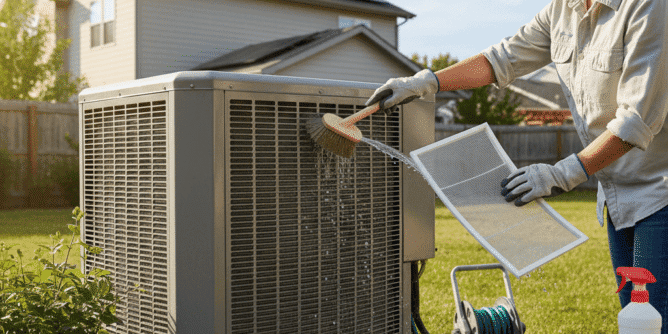
The outdoor condenser needs clear airflow to shed heat. Check the area around the unit and keep plants, storage, and debris at least two to three feet away. Trim bushes and grass to maintain free flow of air.
- Remove leaves and dirt buildup from around the base of the unit
- Clean fins gently with a soft brush and rinse with a low pressure spray
- Ensure the unit sits level on a solid pad to avoid stress on the compressor
Good clearance helps the system reject heat without overworking. If the fan motor or condenser coils appear damaged or heavily corroded schedule a professional review rather than attempting major repairs yourself.
Coil and Drain Line Maintenance for Reliable Cooling
Evaporator and condenser coils transfer heat and must remain clean. When coils are coated with grime their capacity drops and moisture can accumulate leading to ice buildup on the evaporator coil. Clear condensate drain lines also prevent water backup and microbial growth.
Evaporator Coil Signs to Watch
- Reduced cooling output while the fan still runs
- Ice formation on the indoor coil or copper lines
- Higher than normal humidity inside the house
Safe Coil Cleaning Steps
- Turn off power to the unit before any inspection
- Use a no-rinse coil cleaner for indoor coils when appropriate
- For heavy buildup arrange a professional cleaning
Keeping coils and drain lines clear prevents performance loss and reduces the chance of moisture related odors and mold growth.
Ductwork and Airflow Checks That Make a Difference
Leaky or poorly insulated ducts lower system effectiveness by letting cooled air escape into unconditioned spaces. Seal obvious leaks at joints with mastic or foil tape and add insulation in unconditioned attics or crawlspaces.
- Look for gaps near registers, boots, and connections to the air handler
- Replace torn or crushed flexible duct sections
- Balance dampers to reduce pressure imbalances and noisy rooms
Even modest duct repairs can improve comfort and reduce run time. If ducts are difficult to access or heavily contaminated hire a service that tests for leaks and measures airflow.
When Refrigerant or Mechanical Issues Appear
Low refrigerant, worn bearings, or failing electrical components require trained technicians. Warning signs include warm air from the vents, rapid cycling, unusual noises, or leaks of fluid around the indoor unit.
- A steady decline in cooling capacity over weeks
- Hissing or bubbling sounds near refrigerant lines
- Tripped breakers tied to the air handler or compressor
Refrigerant must be handled by licensed professionals. If you suspect a leak or mechanical failure schedule a diagnostic service. Regular preventive checkups catch small issues before they lead to major breakdowns.
Seasonal Tune Ups and Professional Maintenance
Schedule a professional inspection at least once a year with a focus on spring before heavy use. A technician checks refrigerant, inspects electrical connections, measures airflow, and tests safety controls. That visit also gives you a chance to request targeted fixes based on what you observed during the year.
For homes with older equipment or frequent high cooling demand consider twice yearly checks. A spring check prepares the system for hot months and a fall visit confirms readiness for reduced use and any winter precautions.
Small Habits That Add Up Over Time
Routine actions by the homeowner reduce wear and stretch out service intervals. Keep window coverings closed during peak sun hours, use ceiling fans to circulate conditioned air, and limit heat generating activities during the hottest part of the day. These steps lower the load on your system without major investment.
- Cook or run dishwashers during cooler times when possible
- Use LED bulbs that emit less heat in living areas
- Open windows at night when outdoor temperatures drop significantly
Small daily decisions can lower runtime and reduce the chance of emergency repairs during heat waves.
How to Choose a Reliable Service Partner
When you need a full tune up or repairs look for a company with clear licensing, local reviews, and transparent pricing. Ask what will be inspected, which parts are covered, and whether estimates include labor and diagnostic fees. A trustworthy technician will explain findings and options in plain language rather than using confusing jargon.
If you want a starting point for scheduled maintenance or emergency repairs use resources with local experience to keep your system performing. Many local services offer maintenance plans that include seasonal checks, priority response, and discounted parts.
If you prefer to handle minor tasks yourself and still have a pro ready when something more complex appears consider a combination of homeowner maintenance and an annual professional tune up. A local maintenance plan can help keep things predictable and extend the life of your investment. To find maintenance programs and qualified technicians that help keep your AC running visit keep your AC running for more details and service options.
Conclusion
Keeping Your Air Conditioner Efficient depends on steady home habits and timely professional care. Regular filter changes, smart thermostat use, clear space around the outdoor unit, clean coils and drain lines, tight ducts, and scheduled tune ups all add up to better cooling and lower operating costs. Watch for signs such as reduced cooling, strange noises, or ice on lines so problems can be addressed early. If you follow the checklists above and arrange seasonal inspections your system will be more reliable and last longer. Take action now by setting reminders for filter changes and by booking a spring inspection with a trusted service provider. That one step keeps comfort consistent and helps avoid costly repairs later.


